
How Mechanical Watch Movements Work
Mechanical watches are admired by collectors and enthusiasts for their craftsmanship, precision engineering, and traditional watchmaking heritage. Unlike quartz watches that rely on batteries, mechanical watches operate through a complex system of gears, springs, and moving components.
Understanding how mechanical watch movements work can help watch enthusiasts appreciate the remarkable engineering inside these timepieces.
In this guide, we’ll explore the key components of mechanical watch movements and explain how they work together to measure time accurately.
What Is a Mechanical Watch Movement?
A mechanical watch movement is the internal mechanism that powers the watch and drives the hands that display the time.
Instead of using a battery, mechanical watches rely on stored mechanical energy. This energy is typically stored in a tightly wound spring and released gradually through a series of gears.
Mechanical movements are admired for their craftsmanship because they often contain dozens or even hundreds of tiny components working together.
The Main Components of a Mechanical Watch
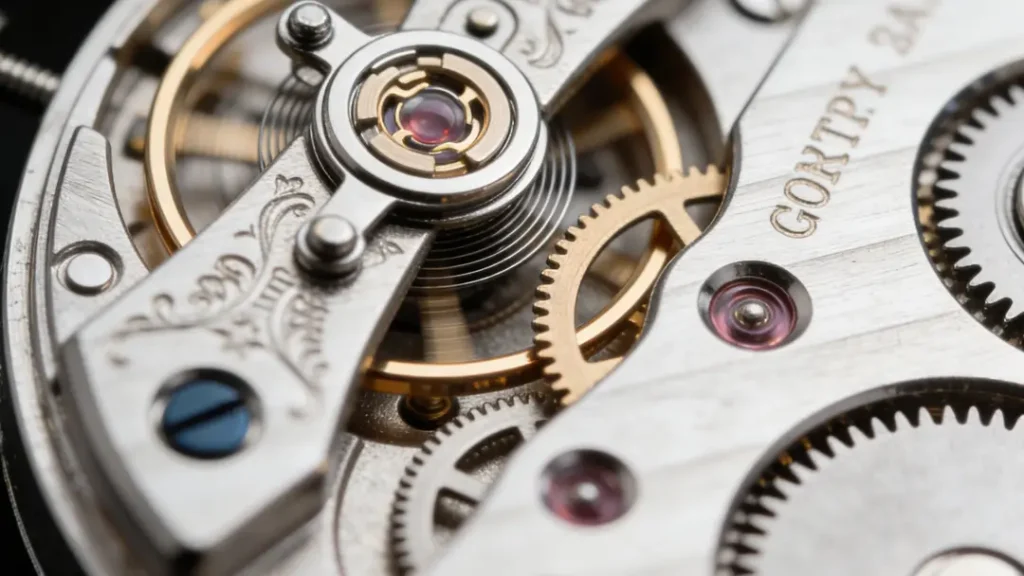
To understand how a mechanical watch works, it’s helpful to look at the main parts involved in the movement.
1. The Mainspring
The mainspring is the primary source of power in a mechanical watch.
It is a thin metal spring that stores energy when it is wound. As the spring slowly unwinds, it releases energy that powers the watch.
This controlled release of energy is what keeps the watch running.
2. The Gear Train
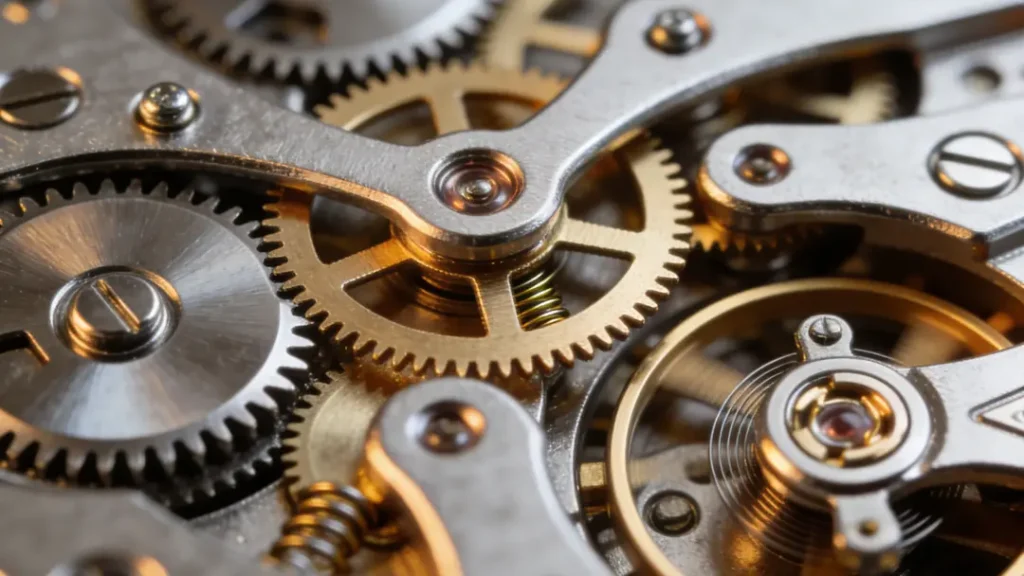
The gear train is a series of small gears that transfer energy from the mainspring to the rest of the watch.
These gears regulate how energy moves through the movement and help control the speed at which the watch hands rotate.
The gear train also ensures that the watch displays time correctly, moving the hour, minute, and second hands at the proper intervals.
3. The Escapement
The escapement is one of the most important parts of a mechanical watch.
Its role is to control the release of energy from the mainspring.
Without the escapement, the mainspring would unwind all at once, and the watch would stop almost immediately.
Instead, the escapement releases energy in small, controlled increments. This creates the familiar “ticking” sound heard in many mechanical watches.
4. The Balance Wheel
The balance wheel works together with the escapement to regulate the watch’s timing.
It swings back and forth at a constant rate, similar to a pendulum in a clock. Each swing helps control the release of energy through the escapement.
This regular oscillation ensures that the watch measures time accurately.
5. The Dial Train and Hands
The dial train transfers energy from the gear system to the hands on the watch dial.
This system controls the movement of:
- The hour hand
- The minute hand
- The second hand
These components work together so that time is displayed clearly and consistently.
Types of Mechanical Watches
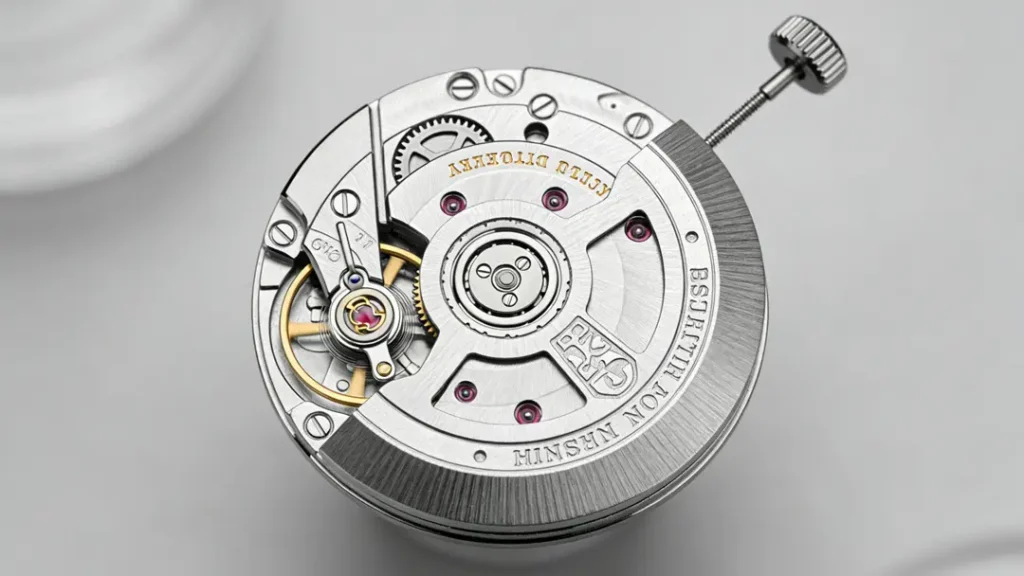
Mechanical watches generally fall into two main categories.
Manual Mechanical Watches
Manual watches require the wearer to wind the crown regularly.
When the crown is turned, it winds the mainspring and stores energy that powers the watch.
Many traditional watch enthusiasts appreciate manual watches because of the interactive experience of winding the watch daily.
Automatic Mechanical Watches
Automatic watches, also known as self-winding watches, wind themselves using the motion of the wearer’s wrist.
Inside the watch is a small rotating weight called a rotor. As the wrist moves, the rotor spins and winds the mainspring automatically.
This allows the watch to continue running without manual winding as long as it is worn regularly.
Why Mechanical Movements Are So Popular
Mechanical watches remain popular despite the accuracy and convenience of quartz watches.
There are several reasons for this.
Craftsmanship
Mechanical watches showcase traditional watchmaking skills and precision engineering.
Heritage
Many watch brands have centuries of watchmaking history tied to mechanical movements.
Appreciation of Engineering
Collectors often admire the complexity of the tiny mechanical systems working together inside a watch.
Mechanical Movements in Replica Watches
Some replica watches also use automatic mechanical movements to imitate the functionality of luxury timepieces.
While these movements may vary depending on the manufacturer, many enthusiasts enjoy mechanical replicas because they offer the traditional feel of mechanical watchmaking at a more accessible price.
If you’re interested in exploring more luxury-inspired timepieces, you can visit our watches website to discover a range of watches inspired by iconic designs.
Final Thoughts
Mechanical watch movements represent one of the most fascinating achievements in traditional engineering. Through a combination of springs, gears, and precision components, these watches can measure time without the need for batteries or electronic systems.
Understanding how mechanical movements work helps reveal the craftsmanship behind every timepiece and explains why mechanical watches continue to captivate collectors and enthusiasts around the world.